Susan J Campling, RN, Psy.D
Psychotherapy, at its core, is the art of facilitating human growth—growth of insight, emotional regulation, resilience, self-awareness, and healthier relationships. Bonsai, often misunderstood as the mere cultivation of miniature trees, is likewise an art of growth: a patient process of shaping, pruning, supporting, and observing a living organism over time. Though these two practices may seem worlds apart—one rooted in psychology, the other in horticulture—they share deep philosophical parallels. In recent years, therapists, clients, and wellness practitioners have increasingly recognized the potential for integrating botanical arts like bonsai into therapeutic spaces and frameworks.
This article explores the intersections between bonsai and psychotherapy: how bonsai mirrors inner psychological processes, the therapeutic mechanisms at play when individuals engage with plant care, and how bonsai can complement or enhance traditional talk therapy. Whether one is a clinician seeking additional tools, a client exploring meaningful outlets, or simply a curious reader, the confluence of these two disciplines offers a rich landscape for reflection and healing.
The Symbolism of Growth
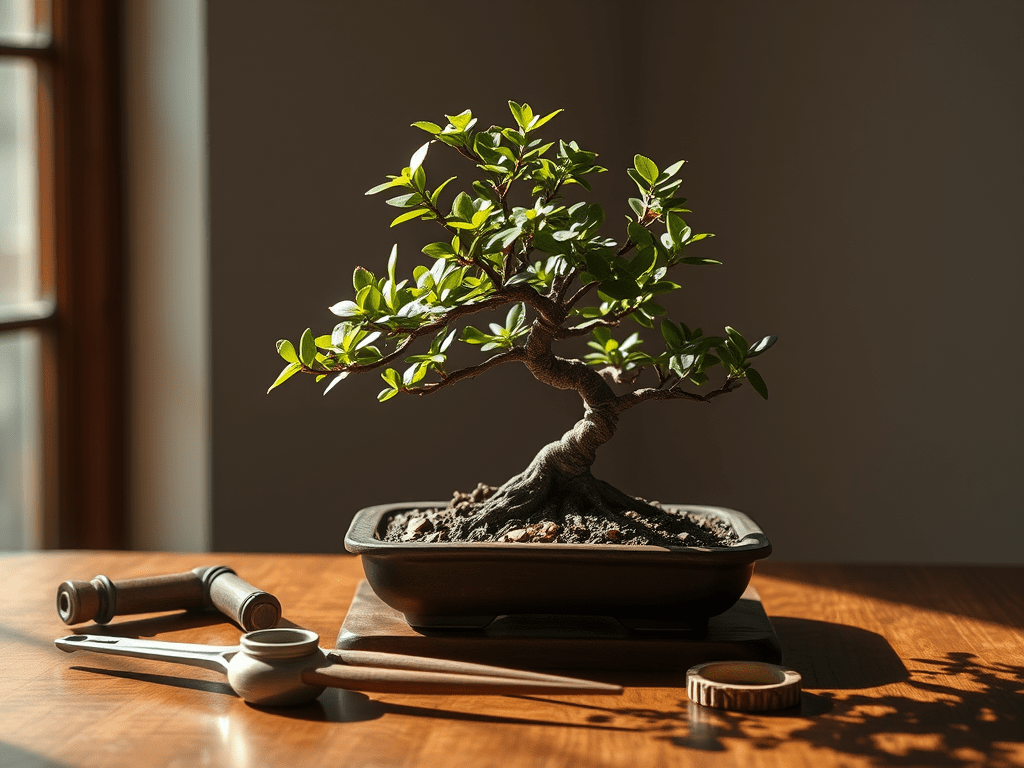
All living plants express growth, but bonsai expresses it with a particular intentionality. A bonsai is not a genetically dwarf tree; it is a standard species cultivated and shaped over decades, sometimes centuries. The tree grows at its natural pace, but it is guided mindfully through pruning, wiring, repotting, and environmental care.
This dialogue between natural development and intentional shaping resembles the therapeutic relationship. In psychotherapy, the client’s inner growth is natural and self-propelled, yet a therapist provides structure, reflection, challenge, and containment. Through this collaboration, clients reshape long-standing internal “branches”—patterns of thinking, behaving, and relating—that may have grown haphazardly or defensively in earlier life stages.
The bonsai’s form is neither forced nor random; it becomes art through attunement, patience, and mutual responsiveness. In the same way, psychological change is never imposed but emerges through a steady interplay between internal processes and supportive guidance.
Mindfulness and the Present Moment
Working with bonsai demands mindfulness. Each action—watering, pruning, repotting—is deliberate and rooted in close observation. Bonsai growers learn to read subtle signs: the tension of a branch, the color of a leaf, the moisture of soil, the rhythm of seasonal changes.
This attunement parallels mindfulness-based therapeutic modalities such as:
- Mindfulness-Based Cognitive Therapy (MBCT)
- Dialetical Behavior Therapy (DBT)
- Acceptance and Commitment Therapy (ACT)
- Mindfulness-Based Stress Reduction (MBSR)
In these models, clients cultivate the capacity to observe their thoughts and emotions without judgment, responding rather than reacting. Caring for a bonsai can naturally train this skill. When a person kneels beside a small tree and focuses solely on its needs and cues, the mind becomes anchored in the present. Anxiety—rooted in the future—quietly loosens its grip, and rumination—rooted in the past—softens.
One bonsai enthusiast described the experience as “learning to breathe with the tree.” This metaphor is apt. The repetitive, gentle routines of plant care can calm the nervous system, reduce sympathetic arousal, and foster a sense of grounding. The tree becomes a point of contemplative stillness, a living reminder to pause.
Therapeutic Mechanisms of Horticulture and Bonsai
Researchers studying horticultural therapy have identified several mechanisms through which plant care supports emotional and psychological well-being. Bonsai, with its detailed and intimate nature, intensifies many of these benefits.
1. Emotional Regulation
Tending to a plant provides immediate sensory feedback—the smell of soil, the texture of bark, the sound of trimming shears. These sensory inputs can regulate the nervous system, particularly for individuals who feel overwhelmed or dysregulated.
For clients with trauma histories, anxiety disorders, or depressive symptoms, bonsai can provide an external focus that is:
- non-threatening
- predictable
- rhythmic
- grounding
Watering a tree or gently pruning branches can serve as a form of behavioral activation, reconnecting the individual with purposeful action.
2. Nurturing as Self-Compassion
Bonsai requires care, but it also tolerates imperfection. Mistakes happen: a branch breaks, a pot drains poorly, a pest appears. The grower learns to accept these challenges and respond adaptively.
This external nurturing often translates into internal compassion. As clients learn to care for a tree—with patience, forgiveness, and gentleness—they can begin to cultivate the same stance toward themselves. Many psychotherapeutic theories, from self-psychology to compassion-focused therapy, emphasize that internal nurturing capacities can be strengthened through external relational experiences. A bonsai can become one such relationship.
3. Mastery and Agency
Clients dealing with depression, chronic stress, or major life transitions often struggle with feelings of helplessness. Bonsai care offers opportunities for mastery. As individuals watch a tree respond positively to their efforts—new buds, healthy leaves, refined shape—their sense of competence grows. This small but meaningful experience of agency can ripple outward into other areas of life.
4. Ritual and Routine
Routine is stabilizing. Many clients benefit from predictable patterns that counterbalance internal chaos. Watering schedules, seasonal pruning, repotting cycles—bonsai care offers rituals that can structure time and anchor clients in a sense of continuity.
5. Projection and Symbolic Meaning
In psychodynamic and Jungian frameworks, external objects can become symbolic mirrors of internal states. Clients may project aspects of their emotional lives onto the tree:
- A branch that won’t bend may represent rigid thinking.
- A root-bound pot may symbolize feeling trapped.
- A fragile new shoot may reflect emerging hope or vulnerability.
Therapists can gently explore these parallels if they arise organically, turning the bonsai into a tool for metaphorical insight.
Bonsai and Trauma Recovery
Trauma survivors often struggle with trust, bodily disconnection, emotional numbness, or hypervigilance. Bonsai can support healing in several ways:
- Safety: A tree is safe to approach, touch, and observe. There is no interpersonal risk.
- Predictability: Bonsai care follows cycles. Trauma often disrupts a sense of predictability; rebuilding it can be soothing.
- Regulation through nature: Exposure to natural elements is known to calm the limbic system.
- Control in moderation: Trauma can leave survivors oscillating between helplessness and rigid control. Bonsai encourages balanced control—active shaping without force.
While bonsai is not a replacement for trauma-focused psychotherapy, it can complement modalities such as EMDR, somatic therapies, or trauma-informed CBT by offering a gentle, embodied, relational experience.
Bonsai in Clinical Practice
Therapists integrating bonsai into psychotherapy do so in several ways. Some keep bonsai trees in their office, using them as visual metaphors or grounding objects. Others offer optional horticultural activities as part of experiential therapy sessions.
Therapy Sessions Where Bonsai Helps
- Grief Counseling:
Tending to a living tree can provide a sense of continuity after loss. Some clients dedicate a tree to a loved one. - Couples Counseling:
A shared bonsai project can highlight communication patterns, collaboration, and patience. - Adolescent Therapy:
Teens often respond positively to hands-on activities that reduce the intensity of direct conversation. - Substance Use Treatment:
Bonsai can become a symbol of new beginnings and long-term recovery, echoing the slow, patient work of healing.
Client Reactions
Some clients find bonsai calming and grounding; others experience frustration when tasks feel difficult. Both reactions are clinically meaningful. A therapist can gently help the client explore responses:
- What does frustration reveal about perfectionism?
- How does patience with the tree compare to patience with oneself?
- What emotions arise when pruning—letting go—becomes necessary?
The bonsai becomes a living canvas for emotional exploration.
Philosophy: Impermanence, Acceptance, and Non-Attachment
Bonsai is heavily influenced by Japanese aesthetics and Zen philosophy, emphasizing:
- Wabi-sabi: the beauty of imperfection
- Ma: the importance of space and emptiness
- Mizuho: harmony with natural cycles
- Shibui: understated simplicity
These principles resonate with many therapeutic concepts. ACT, for example, teaches acceptance of what cannot be controlled and committed action toward what matters. Bonsai embodies this balance: the grower accepts the tree’s natural tendencies even while gently shaping them.
The slow pace of bonsai reminds clients that change is gradual, non-linear, and sometimes imperceptible in the moment. The practice cultivates patience and acceptance of impermanence. Bonsai masters often say the tree is never “finished”; it is always becoming. This mirrors the lifelong nature of personal growth.
Attachment, Relationship, and the Self
From an attachment-theory perspective, bonsai can provide a secure yet flexible “object relationship.” The tree does not judge or abandon. It responds to care but asserts its own needs. This dynamic echoes healthy relational patterns: connection without enmeshment, autonomy without detachment.
Some clients experience a deepening of the self through this relationship. They develop a sense of stewardship and find meaning in caregiving. For individuals with histories of chaotic or inconsistent attachments, the predictability and responsiveness of plant care can be reparative.
Potential Challenges and Ethical Considerations
While bonsai offers many therapeutic benefits, it is not universally appropriate.
- Frustration tolerance: Some clients may become overwhelmed by the complexity or slow progress.
- Perfectionism: Bonsai can trigger performance anxiety in individuals who fear “doing it wrong.”
- Time and resource commitments: Maintaining a bonsai requires ongoing care; therapists should be mindful of clients’ practical limitations.
- Cultural respect: Bonsai has deep cultural roots. Therapists should introduce it respectfully, acknowledging its origins in Japanese and Chinese traditions.
Therapeutic integration should always be optional and collaborative.
Bonsai as a Mirror of the Therapeutic Process
Ultimately, bonsai and psychotherapy share an ethos. Both are processes of shaping, revealing, nurturing, and witnessing. They require:
- Time
- Patience
- Persistence
- Tolerance for uncertainty
- Humility
- Attunement
A bonsai tree invites the same qualities therapists hope clients cultivate: flexibility, resilience, balance, and sustained growth.
One could say that psychotherapy is the bonsai of the human mind: we work with the patterns that have grown out of necessity, some twisted by past storms, others reaching naturally toward the light. With care, pruning, and gentle guidance, the core self can emerge more fully—rooted, integrated, and alive.
Conclusion
Integrating bonsai and psychotherapy is not simply an aesthetic choice; it is a meaningful synthesis of two traditions centered on growth. Bonsai encourages mindfulness, nurturance, patience, insight, and acceptance—all crucial therapeutic capacities. Whether used directly in sessions or simply kept as a symbolic presence in the therapeutic environment, bonsai can deepen clients’ understanding of their own inner landscapes.
Just as a bonsai evolves over seasons and years, human beings grow in cycles. Sometimes growth is visible and dramatic; other times it is subtle, internal, almost hidden. The work of therapy, like the work of bonsai, is to remain present throughout these shifts—to support, reflect, adjust, and trust the process.
In the end, a bonsai tree teaches what psychotherapy often strives to impart: we may not control the conditions of our early growth, but with care, courage, and intention, we can shape our future. The tree becomes a metaphor, a companion, and a testament to the enduring potential for transformation within every person.
 Dr. Susan J Campling